Inside the chamber
Five senses, gentlyguided to onecalm state
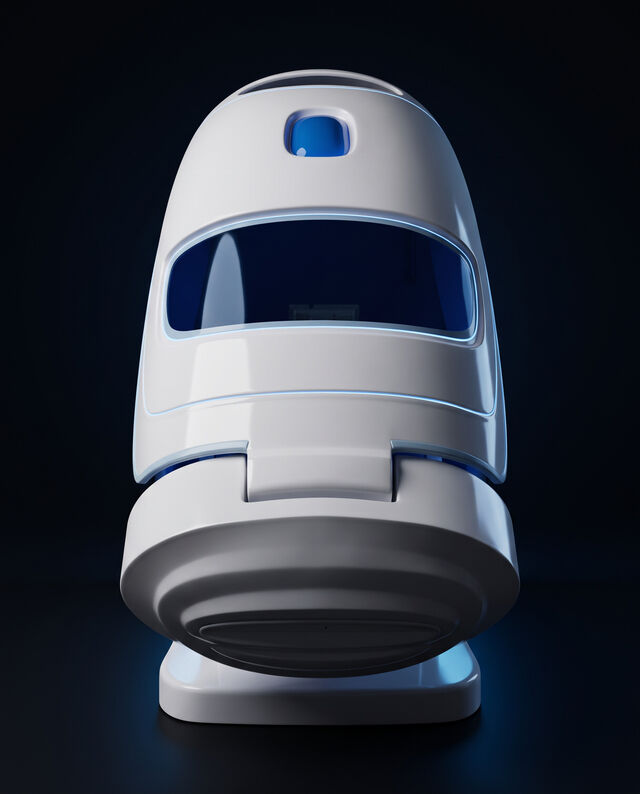
The Theta Chamber isn't one technology — it's five, working as one. Soft rotation, light, sound, a gentle microcurrent and low-frequency vibration are each tuned to the same slow rhythm and delivered together, guiding your brain toward the theta state: the calm, dreamlike rhythm your mind naturally finds in the moments just before sleep.

- ≈ 13 rotations / minute
- Light paced to the audio
- Theta 4–8 Hz · often ~6 Hz
- < 600 µA · most feel nothing
- Low-frequency · full-body
The idea
What is the theta state?
Your brain is electrical, and it works in rhythms measured in cycles per second (Hz). When you're alert and problem-solving, fast beta waves dominate. As you relax, they slow to alpha; slower still is theta (about 4–8 Hz) — the dreamy, restorative band of deep meditation and the drowsy moment before sleep — and slowest of all is delta, deep sleep.
Left to itself, the awake mind rarely settles into theta — there's usually too much going on.
That's exactly the state the Theta Chamber is designed to make easy to reach: the calm, open, restful place where the body recovers and the mind can quieten.
Betaalert
Alpharelaxed
Theta4–8 Hz
Deltadeep sleep
A wellness experience. The Theta Chamber is a relaxation and wellbeing tool, not a medical device. It does not diagnose, treat or cure any condition and is not a substitute for medical care.
The principle
Five inputs, one rhythm
Each sense is tuned to the same slow, theta pace — so light, sound, motion and touch all tell your nervous system the same thing at once: it's safe to slow down.
THETA4–8 Hz
- Rotation≈ 13 rotations / minute
- LightLight paced to the audio
- SoundTheta 4–8 Hz · often ~6 Hz
- Microcurrent< 600 µA · most feel nothing
- VibrationLow-frequency · full-body
How it's built
The five components, in detail
Each element is a proven way to calm the nervous system on its own. The chamber's craft is in tuning them to the same theta rhythm and delivering them together.



-
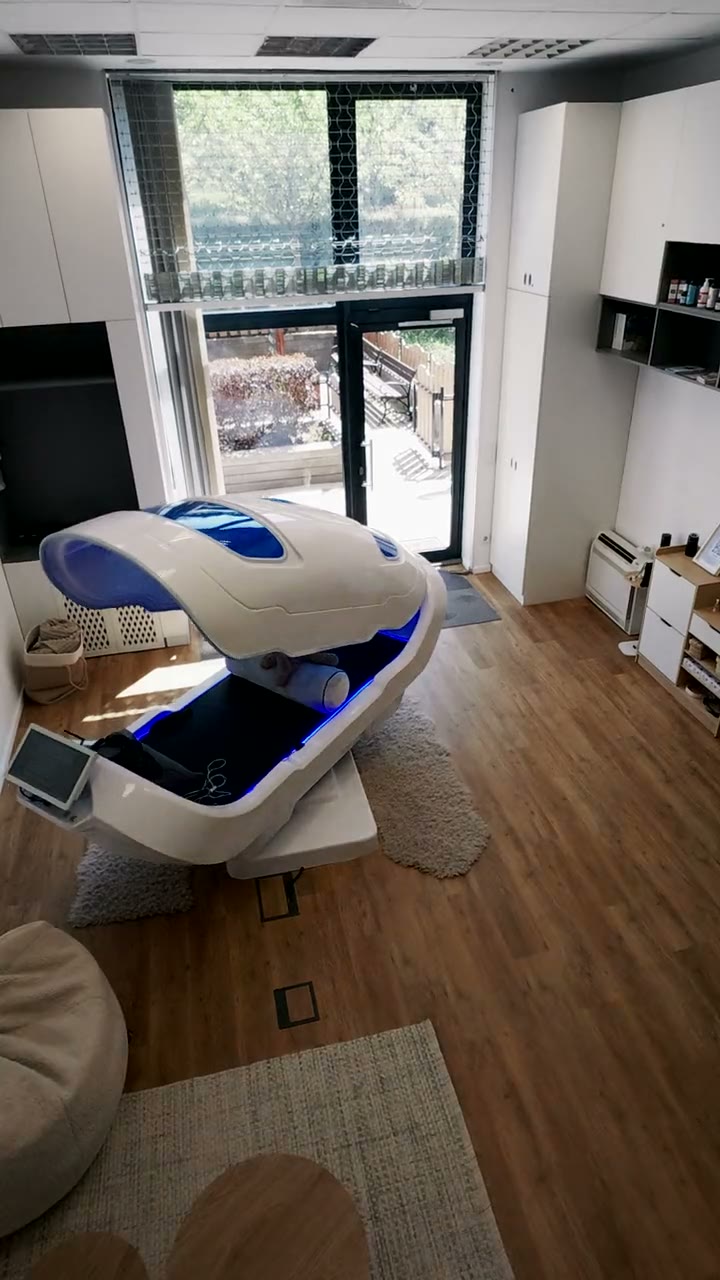
01 · Movement
Gentle rotation
The chamber turns slowly — about 13 rotations a minute, a pace inspired by the Earth's own gentle spin. This soft, continuous motion gently engages the vestibular system (the balance organs of the inner ear). As that steady input takes over, the brain's usual grip on time and space loosens — producing a floating, cradled feeling and freeing the mind to turn inward. Slow vestibular motion is also linked to the hippocampus, the brain's memory-and-emotion hub.
≈ 13 rotations / minute
-
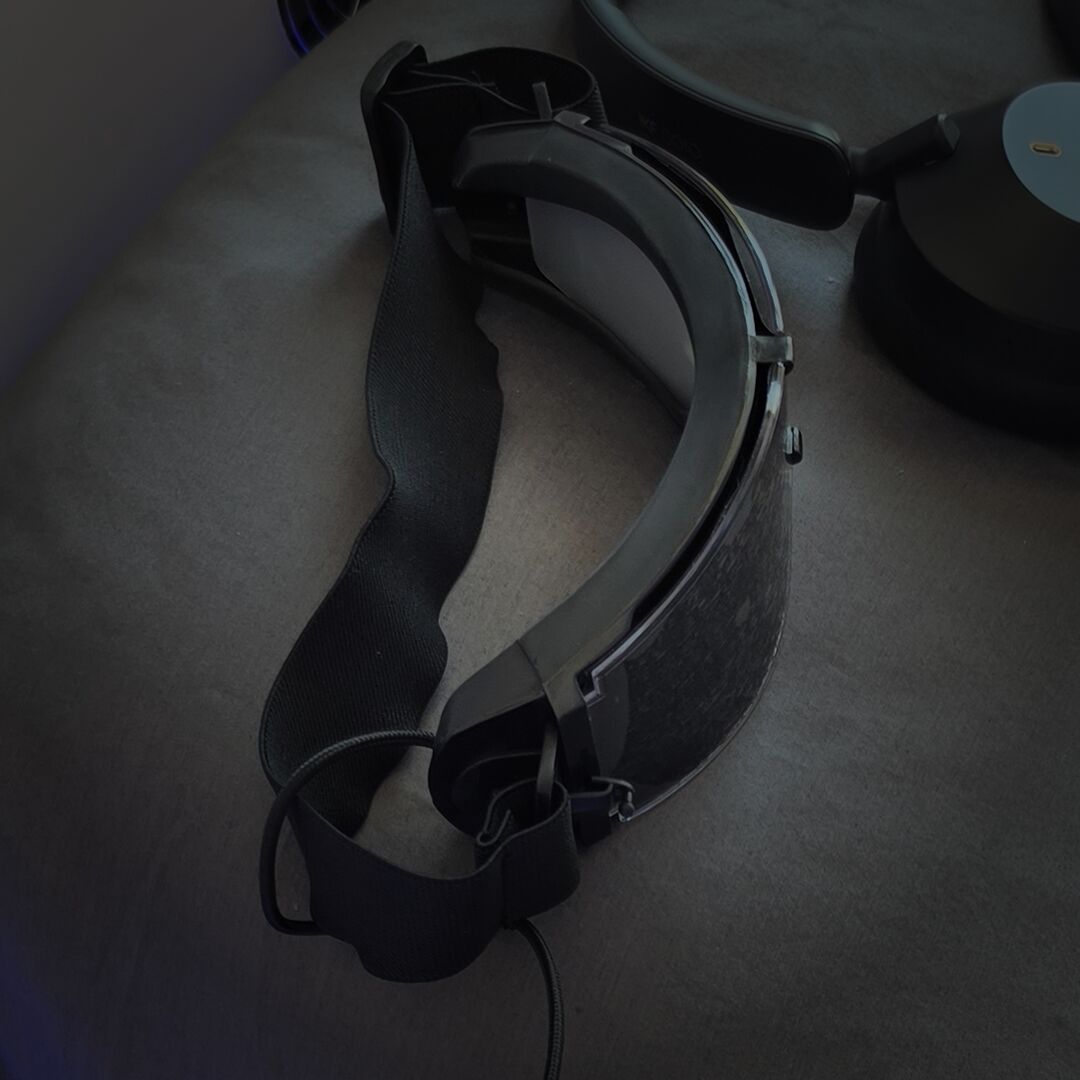

02 · Light
Light goggles (photic driving)
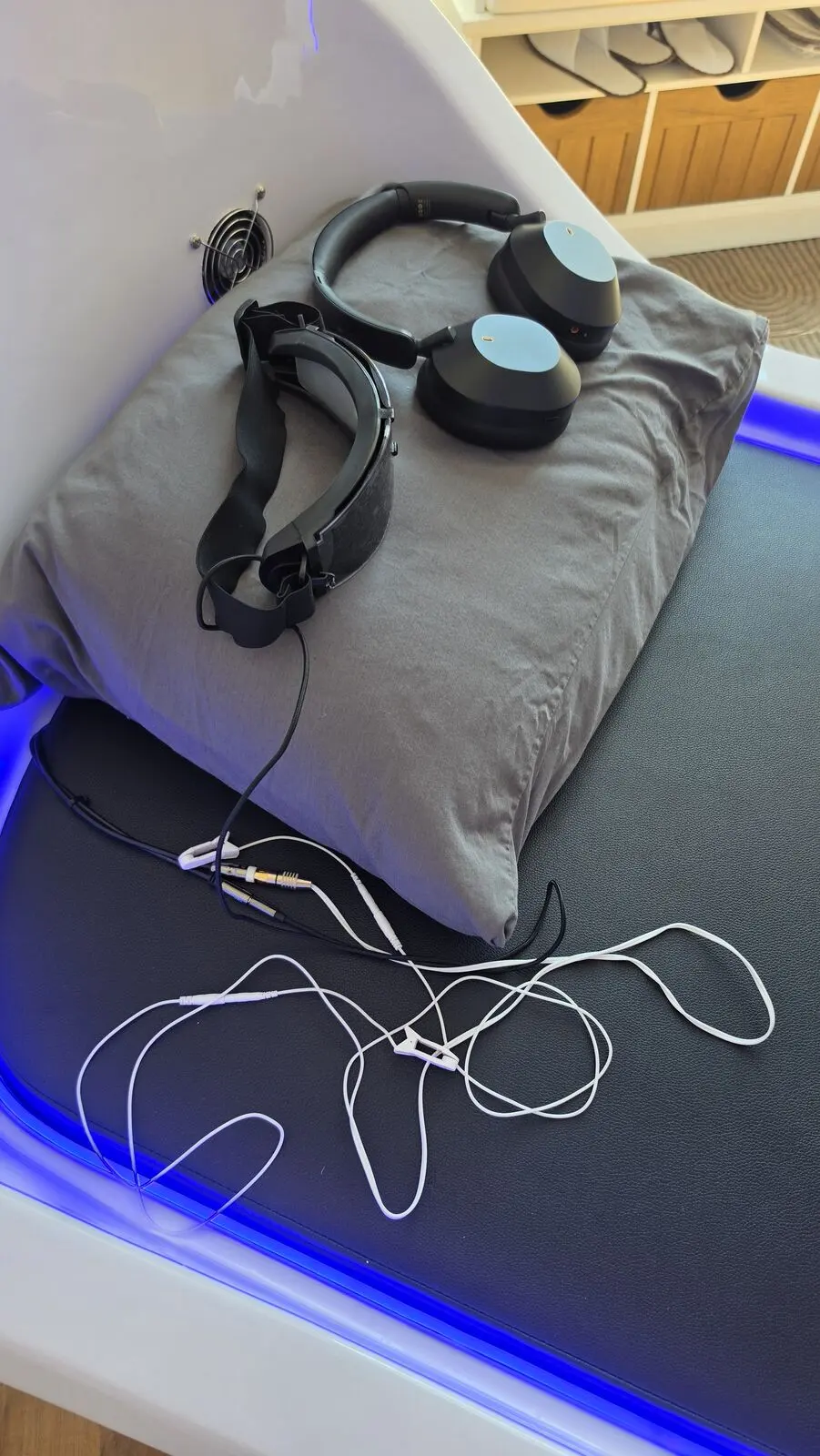
Soft goggles rest over closed eyes and deliver gentle, rhythmic pulses of light, timed precisely to the audio. Known as photic driving, rhythmic light travels from the visual system to the thalamus — a relay deep in the brain that helps set its overall rhythm — nudging brain activity toward the same slow pace. Because light and sound pulse together, both senses lead you the same way.
Light paced to the audio
-
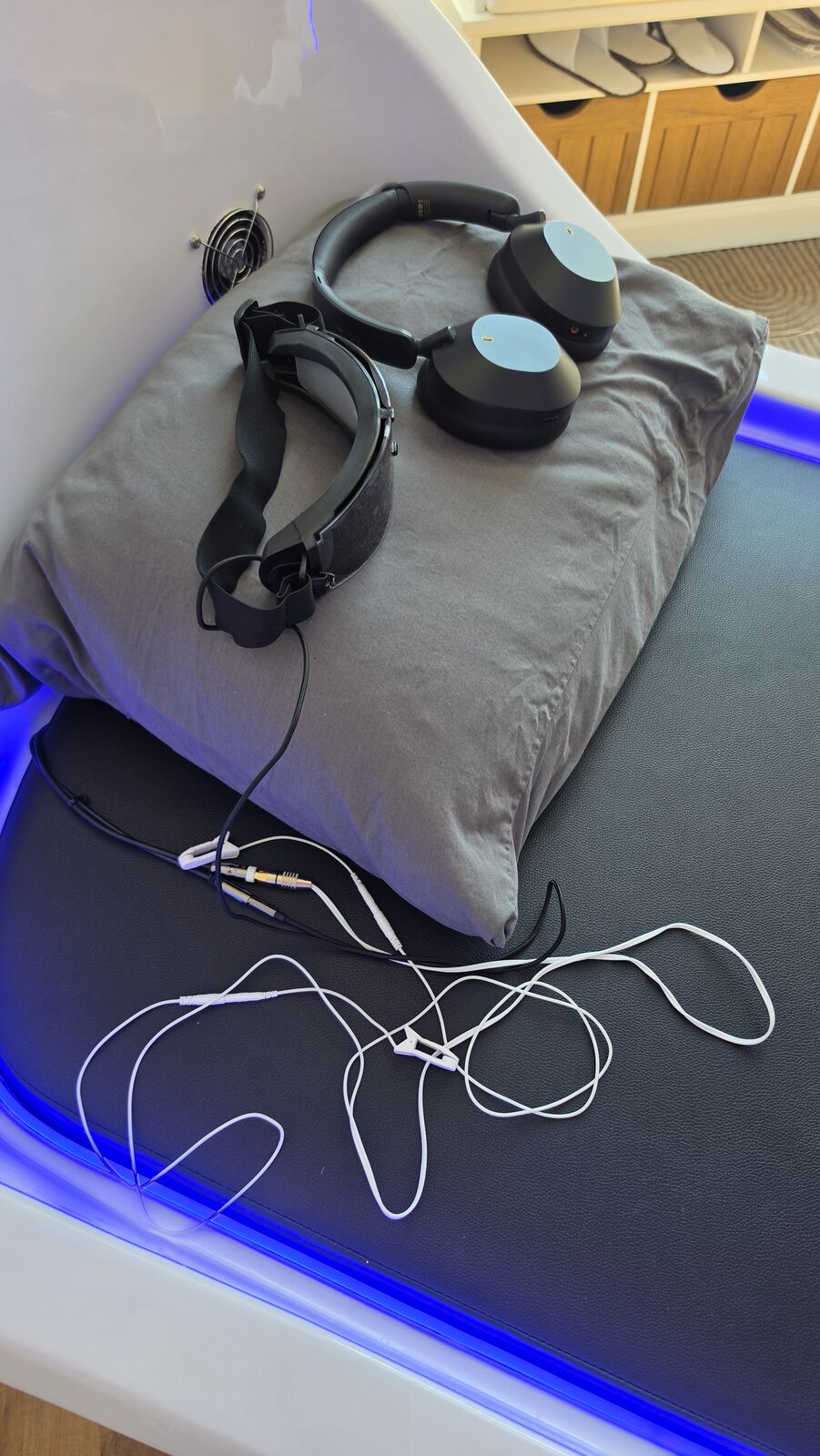
03 · Sound
Binaural-beat audio
Through the headphones, two tones at slightly different pitches — one in each ear — create a soft, felt pulse called a binaural beat. The brain naturally falls into step with that pulse (the frequency-following response), and the chamber sets it squarely in the theta range, 4–8 Hz, most often around 6 Hz. Calming music and gentle guided audio layer on top to deepen the rest.
Theta 4–8 Hz · often ~6 Hz
-

04 · Microcurrent
Gentle ear-clip microcurrent
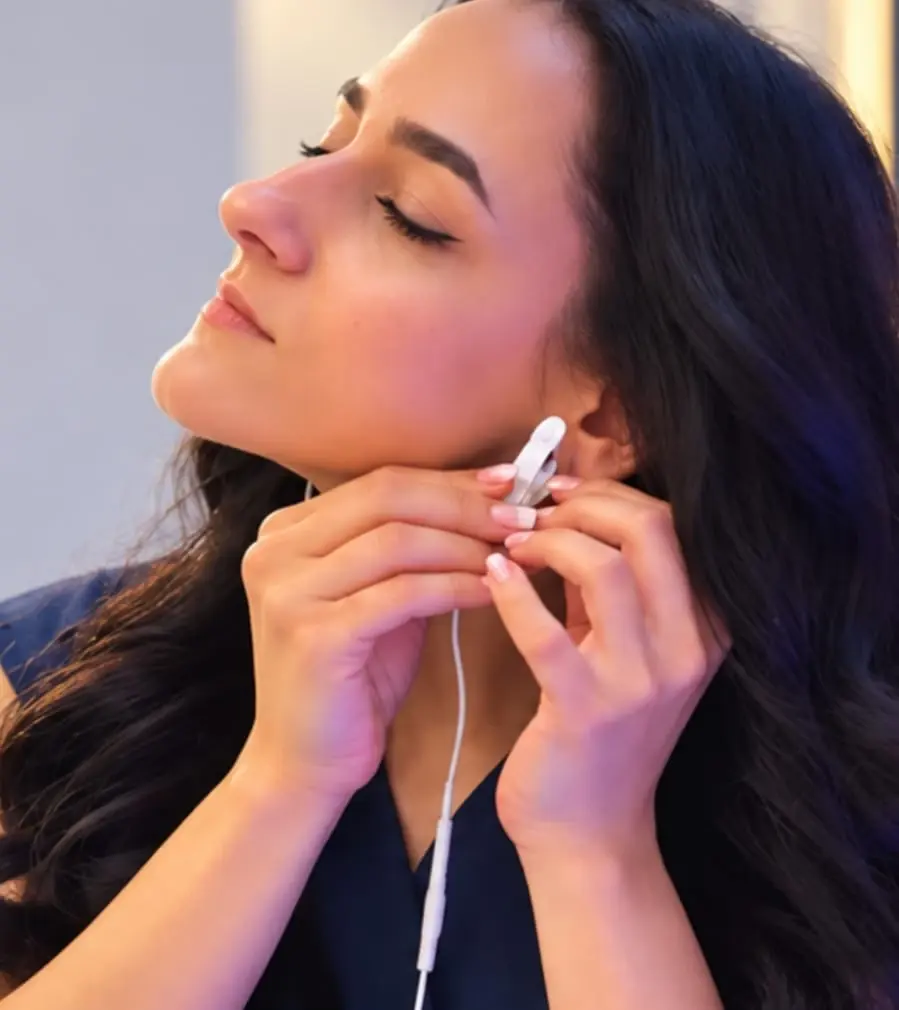
Two soft clips rest on the earlobes and deliver a barely-perceptible microcurrent — well under 600 microamps, gentle enough that most people feel nothing at all, perhaps the faintest tingle. This calm, low-level input (a technique refined over decades) simply helps the body settle more deeply. The current alternates gently and the clips stay comfortable for the whole session.
< 600 µA · most feel nothing
-
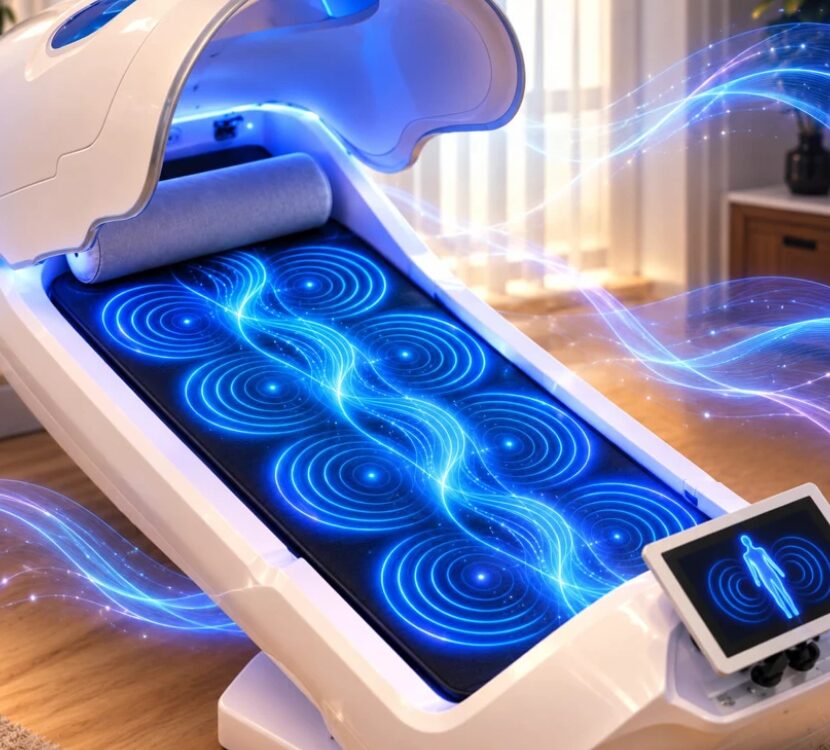
05 · Vibration
Low-frequency vibration
A subtle, low-frequency vibration moves through the body of the chamber — felt more than heard, like the soft bass of ambient music. Tuned to the same slow range, it adds a fifth, full-body layer of calm that rounds out the experience and helps release held tension.
Low-frequency · full-body


Together
Multi-sensory, one direction
On their own, each of these is relaxing. Tuned to the same theta rhythm and delivered at once, they invite your whole nervous system to slow down together — a coherence that's hard to reach any other way, and what makes the chamber feel so unlike anything else.
Multi-sensory entrainment

Why it works
The science of entrainment
Decades of research describe a simple tendency: the brain likes to fall into step with a steady rhythm around it. Pulse a light, a sound or a gentle touch at a set pace, and brain activity gradually synchronises to it. It's the same reason a slow, steady drumbeat can settle you, or why a rocking motion sends a baby to sleep.
The Theta Chamber puts that principle to work on purpose. By pulsing light, sound, motion and touch together at a theta pace, it gently guides your own brainwaves down into that restful 4–8 Hz band — and, over the session, helps hold them there.
The result is relaxation that happens to you, rather than something you have to work at.
That calm, open state is also where the mind is most receptive — which is why the chamber pairs so well with our emotional-intelligence and neuroscience-of-change work.
What it feels like
A typical session, start to finish
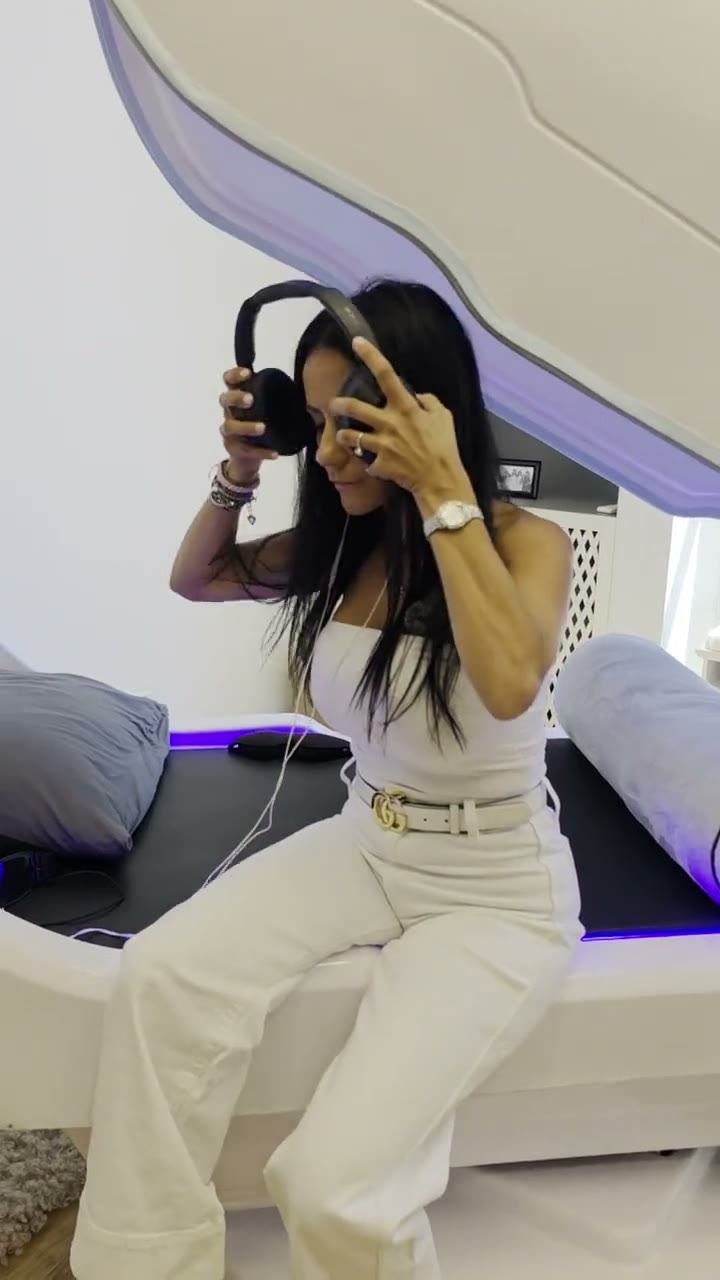
Settling in 1
Settle in
You recline in the padded chamber. We fit the light goggles, headphones and soft ear clips — nothing tight or confining.
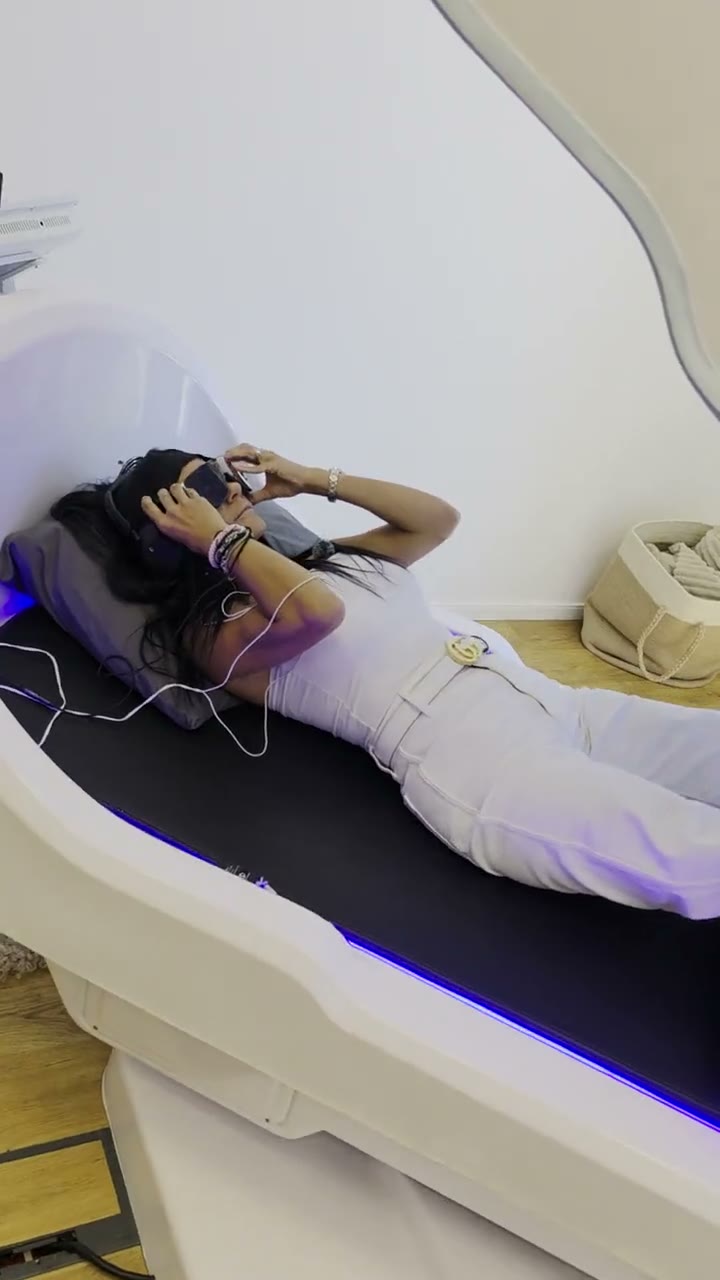
2
Ease down
The gentle rotation, light and sound begin together. In the first minutes you simply notice them; then the body starts to soften.
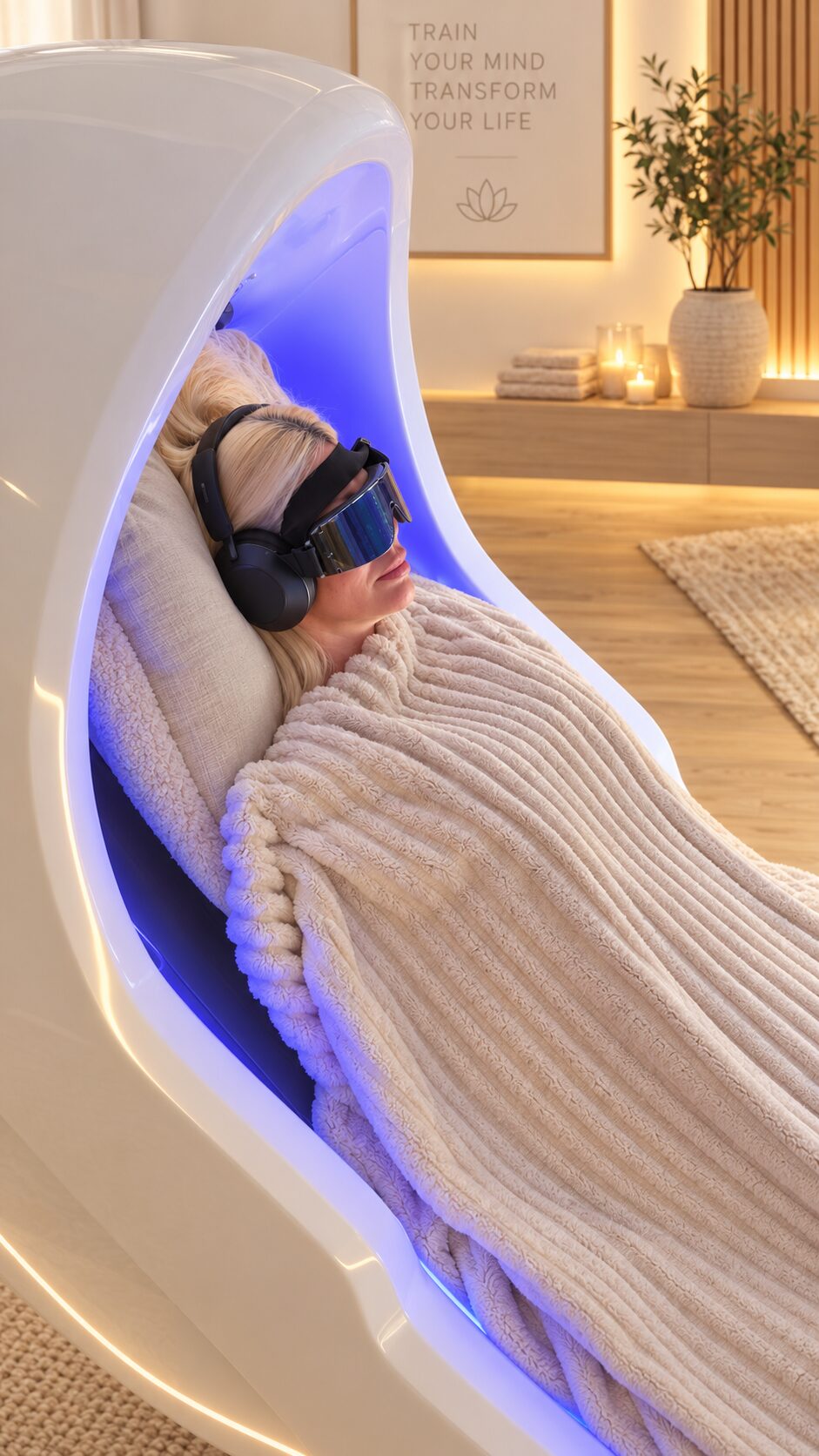
3
Drift into theta
Over 20–30 minutes many drift into a deep, dreamy calm — some doze, some feel a pleasant floating and an altered sense of time.
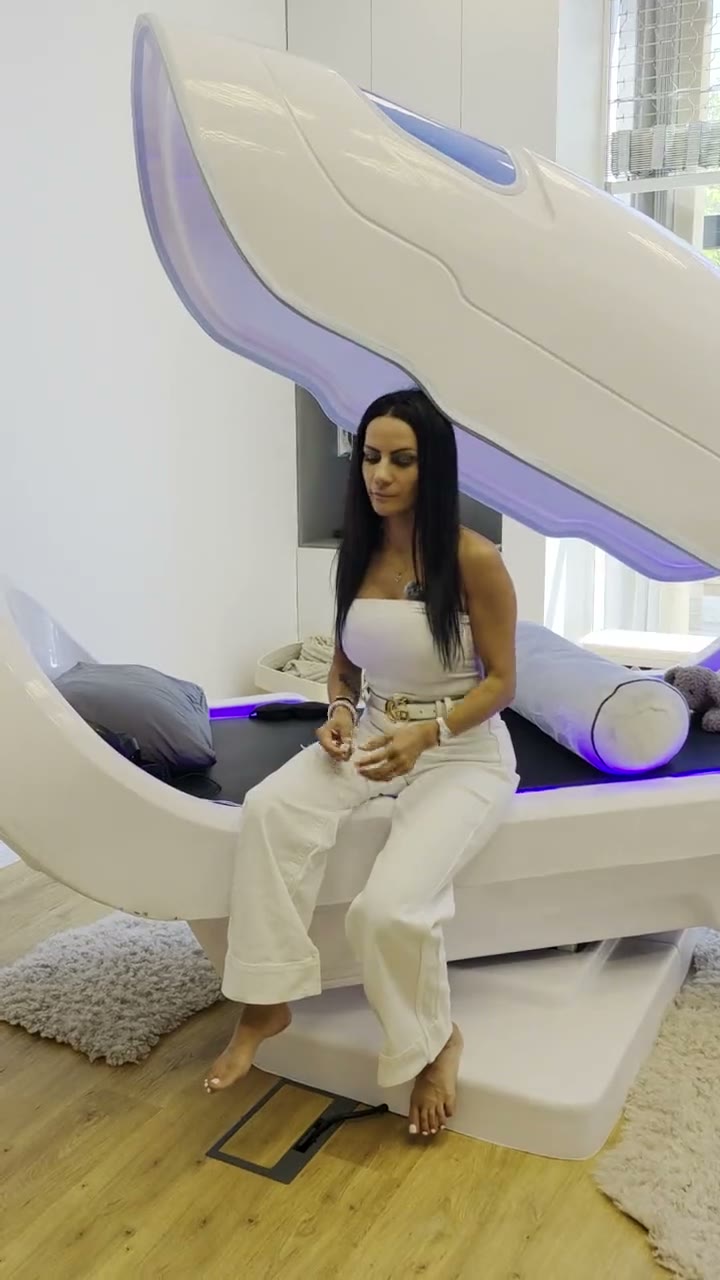
4
Return refreshed
The stimuli gently fade and you come back slowly — most people leave feeling clear, light and deeply rested.

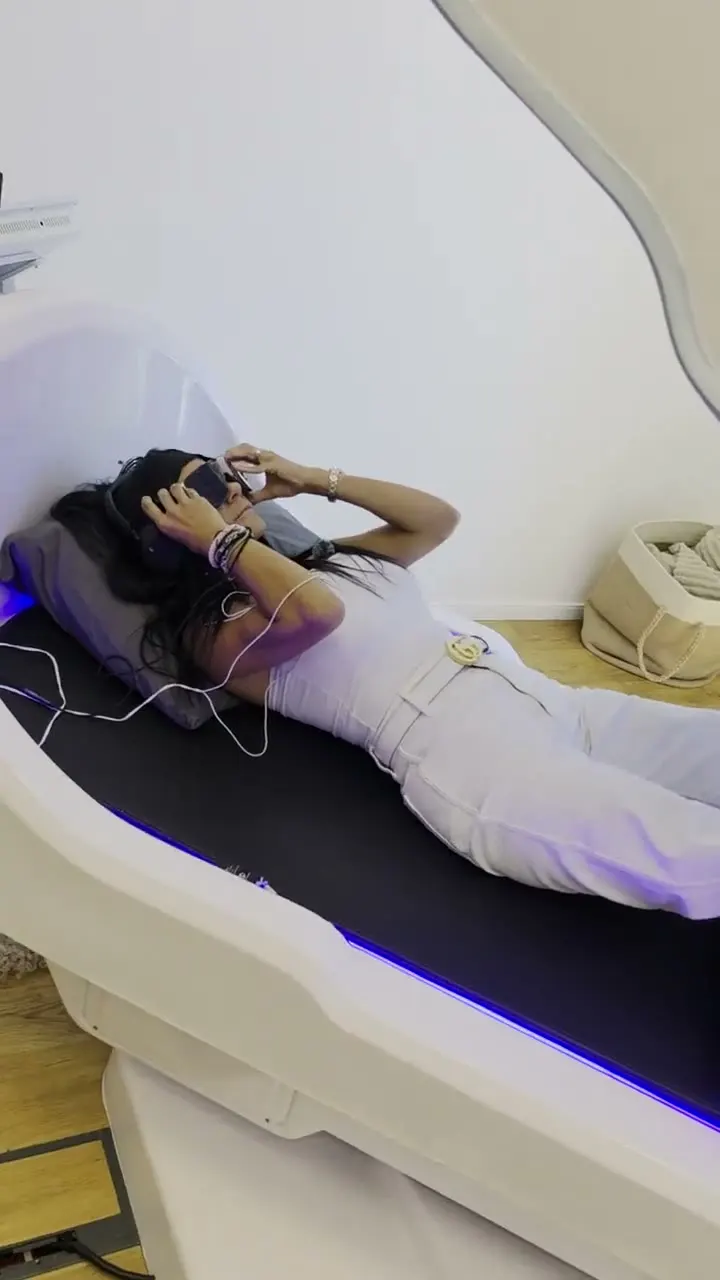

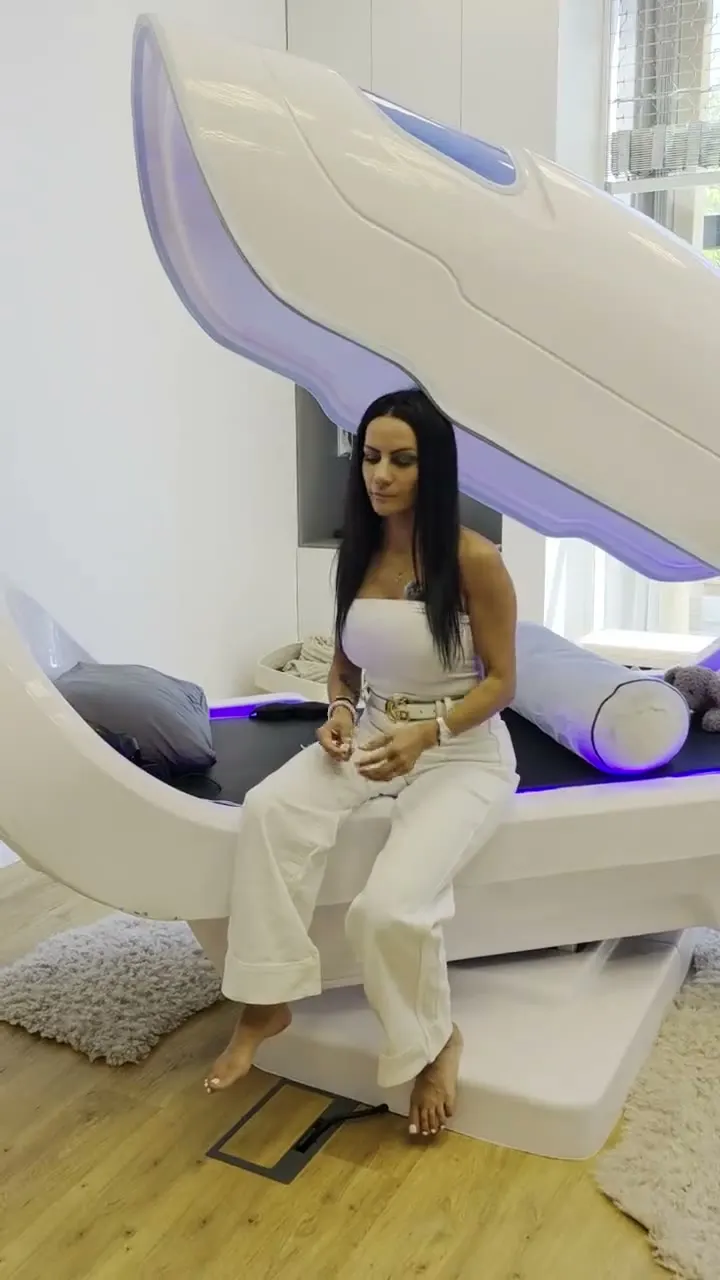
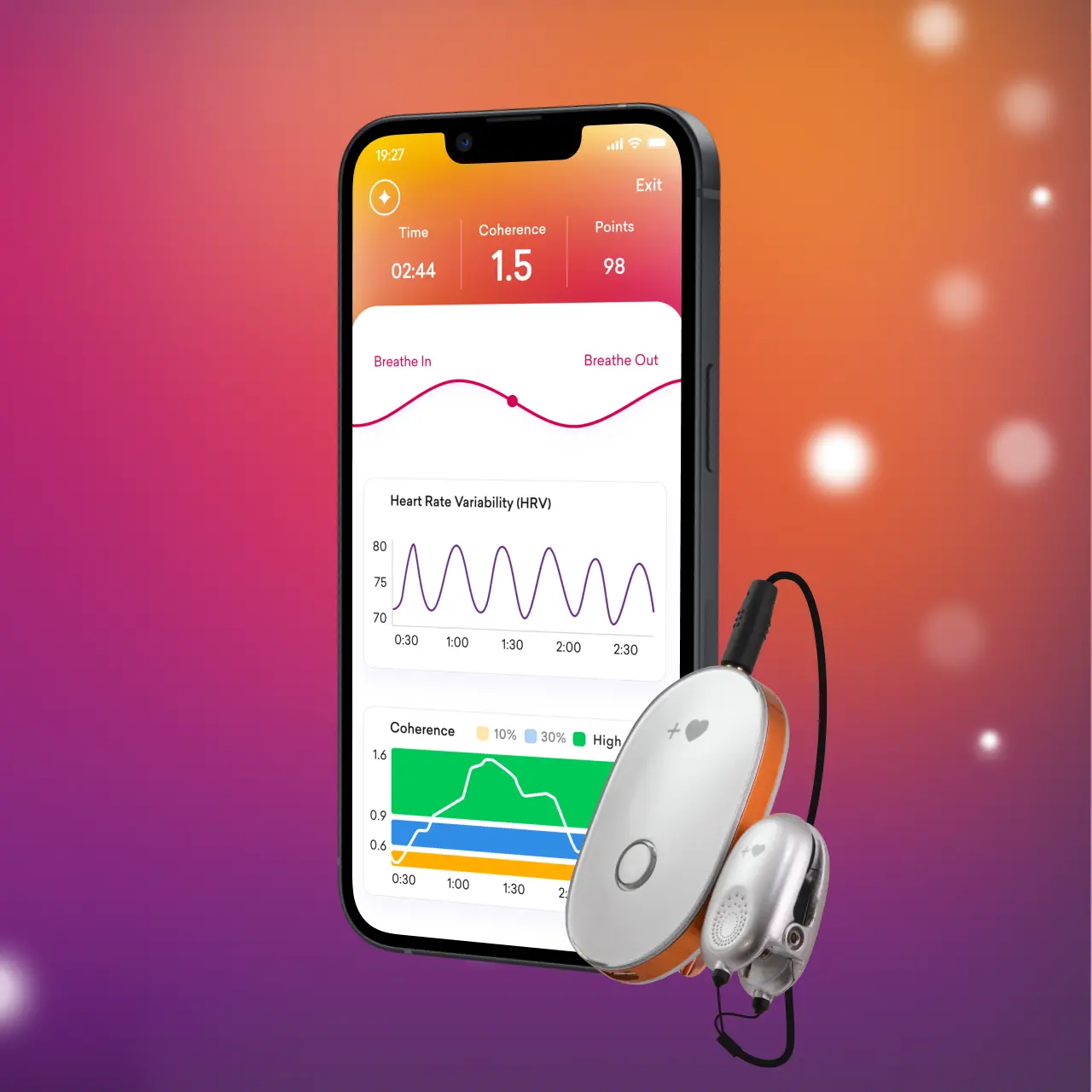
A typical session is 30 minutes in the chamber, plus 5 minutes of breathing with a HeartMath device. The chamber is gentle and drug-free. If you are pregnant, have a seizure condition or an implanted medical device (such as a pacemaker), please check with your doctor first.

Made with care
Engineered and built in the USA
Our chamber is designed, engineered and assembled by INNERGY Dev in the United States — specialists who have spent years refining multi-sensory relaxation technology.
And the Theta Chamber is only the beginning. In the studio we pair it with a small family of trusted wellbeing technologies — for focus, heart-rhythm balance and whole-body insight.
INNERGY Dev · USA


Feel it for yourself
Book your Theta Chamber session
The best way to understand the technology is to experience it. Come in for a single session (€120) or a package of 7 or 10 sessions (€800 / €1,000).
Own a Chamber